top of page


Print to Order Socks, Hats, and Buttons


"Isn't it enough to see that a garden is beautiful without having to believe that there are faeries at the bottom of it too?"
- Douglas Adams

Bee Orchid Button
The Bee Orchid looks so enticing to a bee. It tricks male bees into thinking it is a female bee. The male bee then spends a great deal of its time on the orchid picking up all of the pollen from the flower before leaving and being fooled by another Bee Orchid. Funny enough, the flower itself also looks like a smiling face.

Pollinator's Pattern Socks
Flowers include: Peach Tree Flower, Chrysanthemum, Bee Orchid, White Daisy, Prickly Pear Cactus Flower, Purple Aster

Mexican Mole Lizard Button
As its name implies, this weird reptile known as a mole lizard spends most of its time underground. Like some other amphisbaenians, it has no back legs, but only two large front claws which assist it in digging. Although it looks a little like a snake, it is not dangerous and not in the snake family, but more closely related to a lizard.

Diversity of Yuccas Socks

Whitetip Shark Socks
The white tip shark is known for the white patch on its dorsal fin. It occupies open ocean waters in tropical and subtropical regions. They have live births and travel the seas with pilot whales. They are at risk from fishing.

Atlantic Puffin Socks
Puffins live for 20 years and mate for life, meeting their mate at the same place every year for egg rearing. They greet each other by rubbing beaks together in a behavior called billing. They take turns on the nest for incubation. You may hear them in their underground burrows groan like a cow. It is thought that the sound they make is easy to hear through the dense rock of the burrow city speckling the coastline.

Capybara and Friends Socks
This South American critter is friends with everyone! They are semi-aquatic and love to go for a swim. Known for being exceptionally sociable, they are tolerant and peaceful.

Spotted Skunk Socks
The Spotted Skunk can be found across North America and like other skunks, it displays a warning by lifting its tail prior to spraying, but in addition to this behavior, it also does a very impressive handstand making it unique among skunk species!

Socks For the Birds

Mexican Free-tailed Bat Button
If you are in the southern United States, look for them under bridges. In Austin, Texas under the Congress bridge a colony roosts that is so large that it is often seen on the weather radar.

Celtic Kitty Socks
Love kitties? Me too!

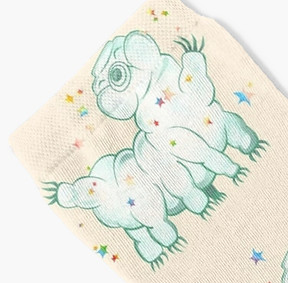
Sparkle the Dancing Water Bear Socks
The tiny and microscopic water bear is one of the toughest creatures on the planet. They live live everywhere and persist in extreme conditions from mountaintops and volcanoes. They have even been to outer space!

Deep Stuff Dumbo Octopus Socks

Zoonies Diversity Socks
The Zoonies series is intended to shine a light on the lesser known underdogs of the natural world. Like aliens on our own planet, hundreds of new species are still discovered by scientists every year. A great companion to any curious kid, or adult kid at heart.

Peacock Mantis Shrimp Socks
This series of cute animals is intended to shine a light on the lesser known underdogs of the natural world. Like aliens on our own planet, hundreds of new species are still discovered by scientists every year. We should preserve them and their home!
The very talented Peacock Mantis Shrimp is beautiful, strong, and cheeky. Their eyes can see more colors than the human eye and they can throw a punch as fast as a bullet, but this little guy just wants to look cute. This showy character is a great companion to any curious kids, or adults who are kids at heart.
The very talented Peacock Mantis Shrimp is beautiful, strong, and cheeky. Their eyes can see more colors than the human eye and they can throw a punch as fast as a bullet, but this little guy just wants to look cute. This showy character is a great companion to any curious kids, or adults who are kids at heart.

Dung Beetle's Got This Socks

Dung Beetle's Got This Pin

Dung Beetle's Got This Bucket Hat

Dung Beetle Pin

Cambrian Celebration Socks
Our planet has experienced 5 major extinction events throughout its existence. Each extinction event is followed by an explosion of new life taking up empty niches in nature left behind. The Cambrian Explosion 541 million years ago is one such celebration of new life where the trilobites were the ruling organism.

Deep Sea Zoonies Socks
The Zoonies series is intended to shine a light on the lesser known underdogs of the natural world. Like aliens on our own planet, hundreds of new species are still discovered by scientists every year. A great companion to any curious kid, or adult kid at heart.

Angry Red-Eyed Katydid Pin
I once interrupted a fight between a Greater Arid Land Katydid or "Red-Eyed Devil" and a spiny lizard. When I opened the back door, both stopped and gave me a guilty look. The lizard quickly hid, but the katydid came at me with its legs up and wings out like a boss.
With a high population in the Texas Hill Country, the Red-Eyed Devil is usually active at night in the hot, arid conditions like Texas has. They are different than the other plain green katydid that Texas has. Look for the red eyes of the devil to identify this one. Be sure to leave them alone, too. They do bite if you pick them up!
With a high population in the Texas Hill Country, the Red-Eyed Devil is usually active at night in the hot, arid conditions like Texas has. They are different than the other plain green katydid that Texas has. Look for the red eyes of the devil to identify this one. Be sure to leave them alone, too. They do bite if you pick them up!

Grumpy Houston Toad Baseball Hat
The Houston Toad buries itself in sandy soils throughout its hibernation in the winter. At breeding times, populations gather at ponds. Males compete for the the ladies with a shrill song then mate in the ponds. When inflated, their throats turn to a deep blue-purple hue. Although this East Texas native produces about 3,000 eggs per breeding season, there are still only less than 2,000 toads left in the wild, climbing up from just 85 individuals in 2011 after the
Bastrop forest fire. Headstart programs raise these toads in captivity and then release them into the wild for a better chance out in nature.
*
Aside from droughts and fire, the toad has suffered from urbanization and habitat loss. If you own land in their region, you can manage native plant communities and protect shallow ponds for their breeding grounds. They will even pay you back by eating your bad bugs!
Bastrop forest fire. Headstart programs raise these toads in captivity and then release them into the wild for a better chance out in nature.
*
Aside from droughts and fire, the toad has suffered from urbanization and habitat loss. If you own land in their region, you can manage native plant communities and protect shallow ponds for their breeding grounds. They will even pay you back by eating your bad bugs!

Grumpy Houston Toad Pin
The Houston Toad buries itself in sandy soils throughout its hibernation in the winter. At breeding times, populations gather at ponds. Males compete for the the ladies with a shrill song then mate in the ponds. When inflated, their throats turn to a deep blue-purple hue. Although this East Texas native produces about 3,000 eggs per breeding season, there are still only less than 2,000 toads left in the wild, climbing up from just 85 individuals in 2011 after the
Bastrop forest fire. Headstart programs raise these toads in captivity and then release them into the wild for a better chance out in nature.
*
Aside from droughts and fire, the toad has suffered from urbanization and habitat loss. If you own land in their region, you can manage native plant communities and protect shallow ponds for their breeding grounds. They will even pay you back by eating your bad bugs!
Bastrop forest fire. Headstart programs raise these toads in captivity and then release them into the wild for a better chance out in nature.
*
Aside from droughts and fire, the toad has suffered from urbanization and habitat loss. If you own land in their region, you can manage native plant communities and protect shallow ponds for their breeding grounds. They will even pay you back by eating your bad bugs!

Echidna Pin
The Echidna, a type of monotreme, is a mammal that lay a single egg into a pouch each year. Unlike other mammals, the milk that they produce is released through the pores in their skin, rather than teats. Like another monotreme, the platypus, the short-beaked variety lives in Australia, but other echidnas also reside in New Guinea, most of which there are threatened or endangered due to habitat loss and hunting. Also known as the "spiny anteater" their long, sticky tongue helps them weed out termites and ants for dinner.
bottom of page